GPT-5.5 vs Claude Opus 4.8: Flagship Showdown, June 2026

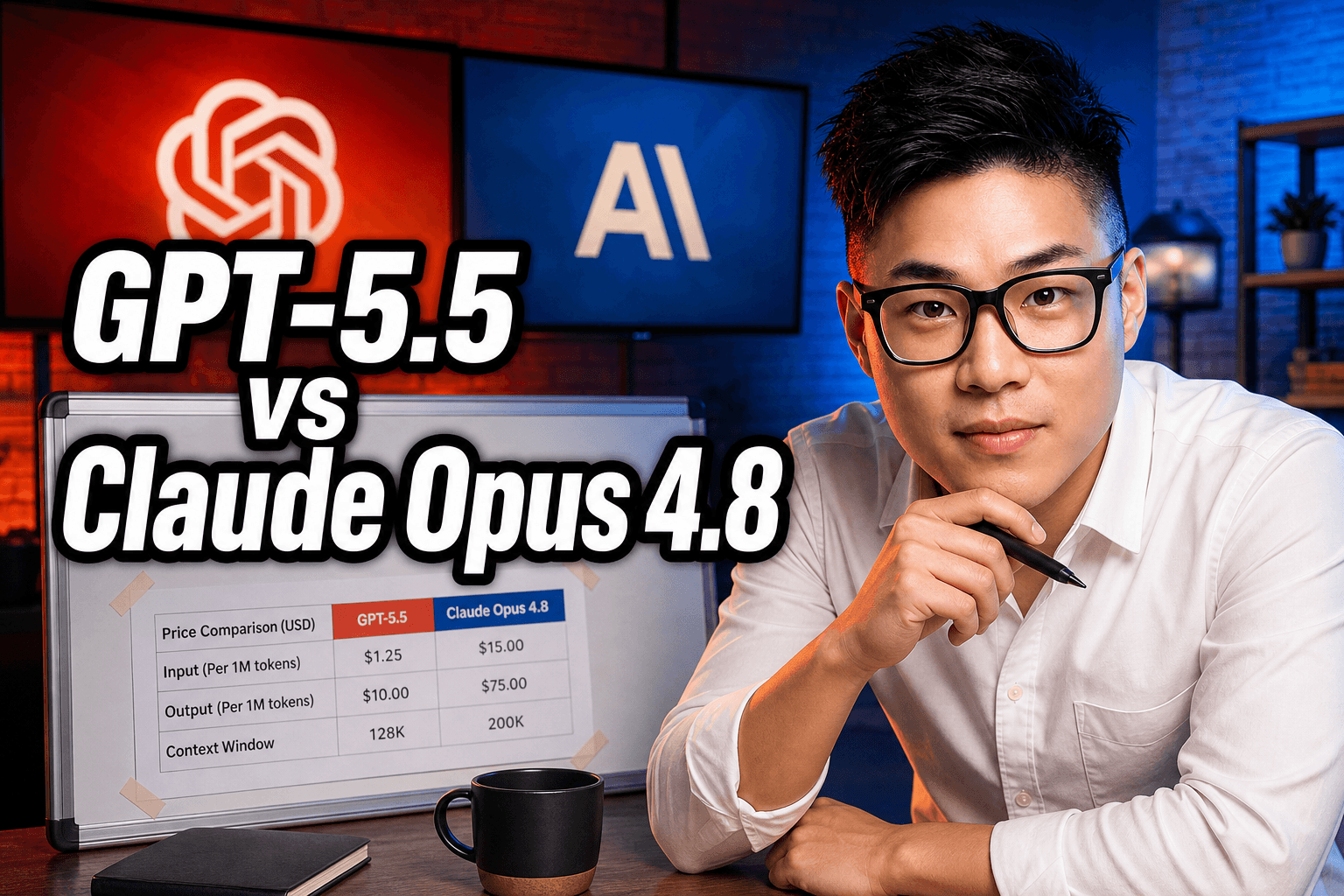
Two models dominate enterprise conversations right now: OpenAI's gpt-5.5 and Anthropic's claude-opus-4-8. Here's where they actually differ.
Pricing. Both models share identical input costs at $5.00/1M tokens. On output, claude-opus-4-8 edges cheaper at $25.00/1M versus gpt-5.5's $30.00/1M — a 17% gap that compounds fast on high-throughput workloads.
Safety posture. OpenAI's June 2026 Threat Report documents active misuse patterns across their model fleet, signaling aggressive monitoring investment. Anthropic has historically published Constitutional AI methodology; neither company has a clean record on jailbreaks, but OpenAI's reporting cadence is currently more public-facing.
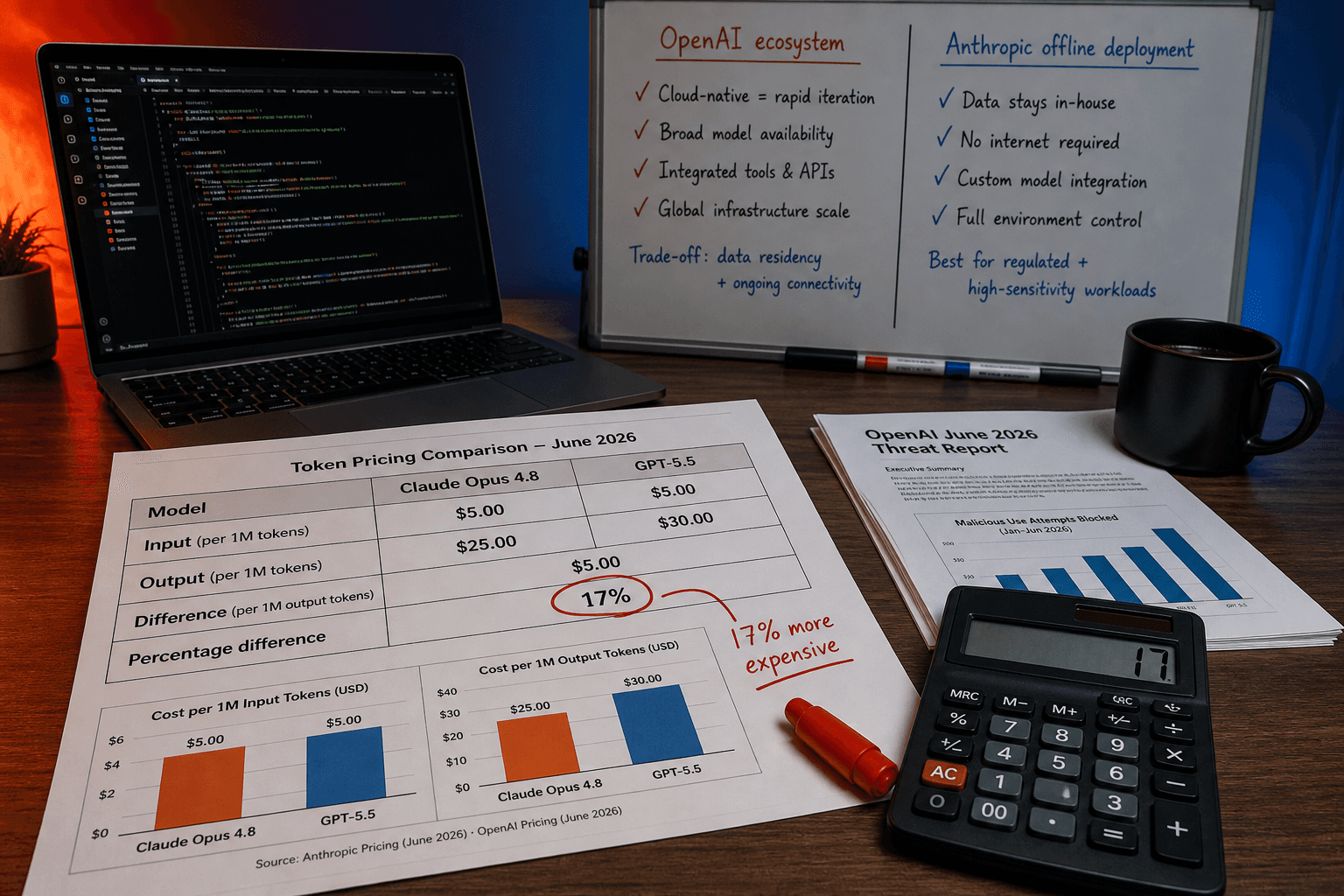
Agentic/coding use. Community evidence (HN thread on AI coding flow states) suggests both models handle long-session agentic coding, though claude-opus-4-8 has documented offline/air-gapped deployment paths via third-party tooling — relevant if OpenAI's rumored on-prem product hasn't shipped for your use case yet (speculative: on-prem OpenAI availability timeline unconfirmed).
Verdict. For cost-sensitive output-heavy pipelines, claude-opus-4-8 wins on price. For teams already embedded in the OpenAI ecosystem with fine-tuning dependencies, gpt-5.5 is the lower-friction choice. Neither model is clearly superior on reasoning benchmarks without controlled, task-specific testing — don't trust vendor marketing on that.