[Rumor] MAI Models: Microsoft's Seven-Model In-House AI Push Explained

Unconfirmed report — treat as rumor.
Microsoft AI has quietly built a family of seven proprietary MAI models spanning reasoning, coding, image generation, image editing, transcription, and voice — a broad internal stack the company says is designed for continuous improvement rather than one-off launches.
The announcement dropped June 2, 2026, but discussion has picked up sharply in late June and into July as analysts parse what it means for Microsoft's reliance on OpenAI.
What Are the MAI Models, Exactly?
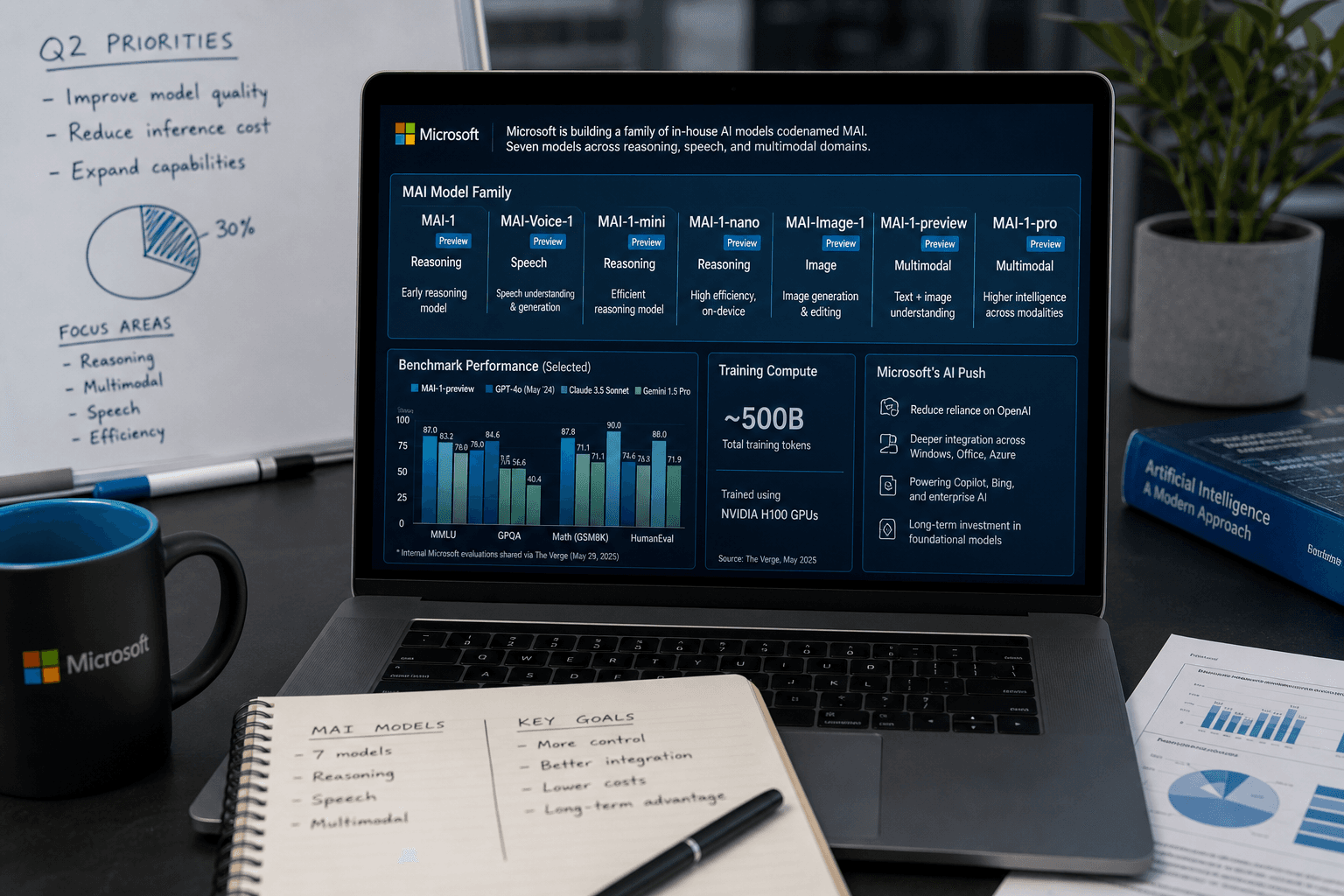
Microsoft hasn't published detailed benchmark scores or pricing for the MAI lineup publicly — at least not yet. What's confirmed: seven distinct models, each targeting a specific modality, packaged as an integrated system. That's a notable architectural choice. Instead of a single flagship, Microsoft is betting on specialized components that can be swapped or upgraded independently.
What Does Microsoft's MAI Push Mean for Its OpenAI Partnership?
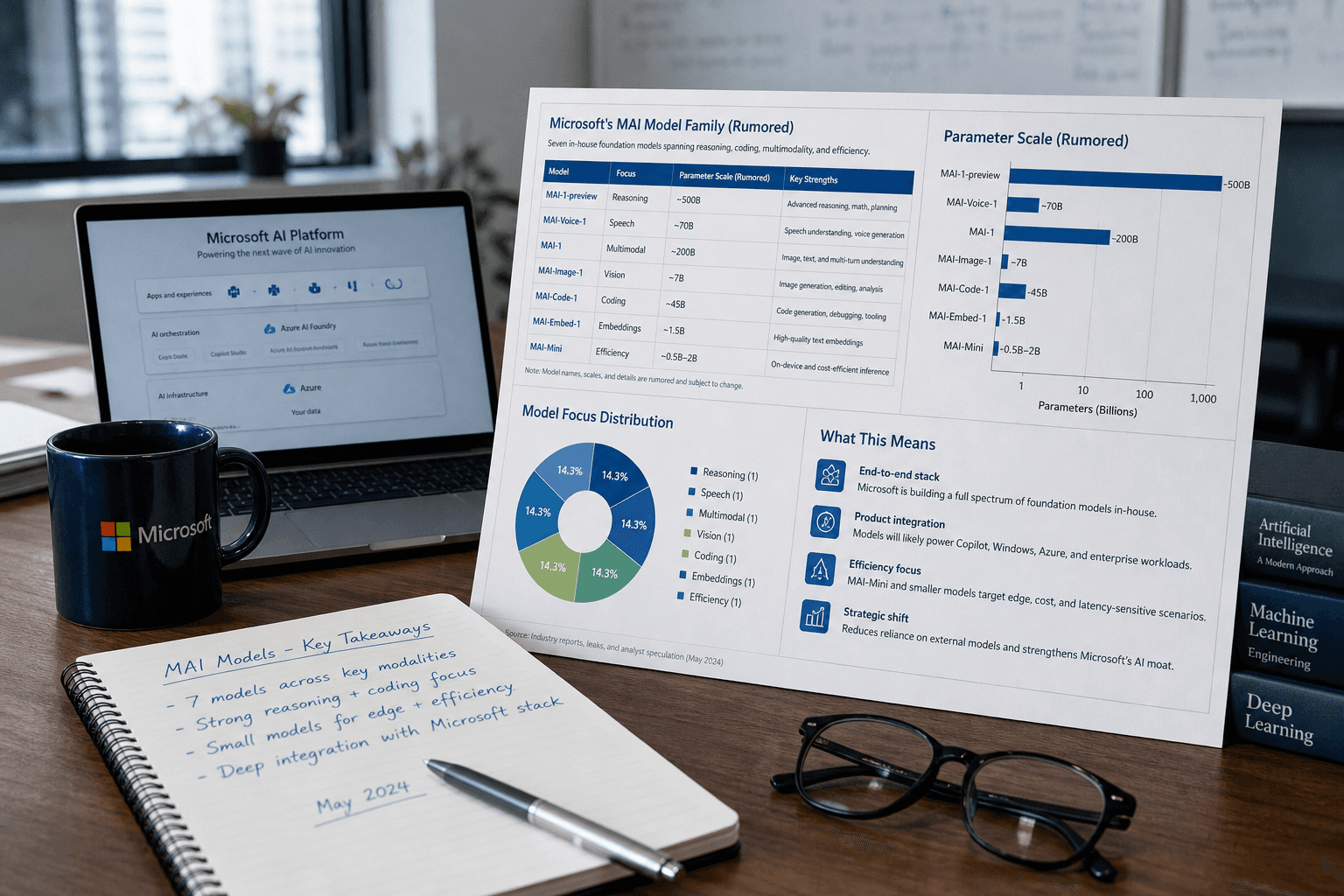
This is the question the community is circling. Microsoft holds a massive stake in OpenAI and routes much of its Azure AI business through OpenAI's models. Building seven in-house alternatives looks like a hedge — or, read more aggressively, the early stages of a long-term exit ramp. This looks like Microsoft wants pricing leverage and supply-chain independence, not a clean break. The two relationships can coexist, at least for now.
The timing is interesting too. With the White House reportedly pushing voluntary AI model standards as a de facto clearance layer for frontier releases — talks that intensified around July 1-2, 2026 — having proprietary in-house models gives Microsoft a seat at that standards table on its own terms, not just as OpenAI's distribution channel.
No context window figures or benchmark numbers have been officially released for MAI. Watch for those details at a likely Microsoft Build follow-up or Azure announcement.