Docs Were Poisoned, and Creators Are Done Being Fair: Two Fights That Are Actually About Trust

Laravel Cloud Just Tried to HACK the AI Era—and Got Caught
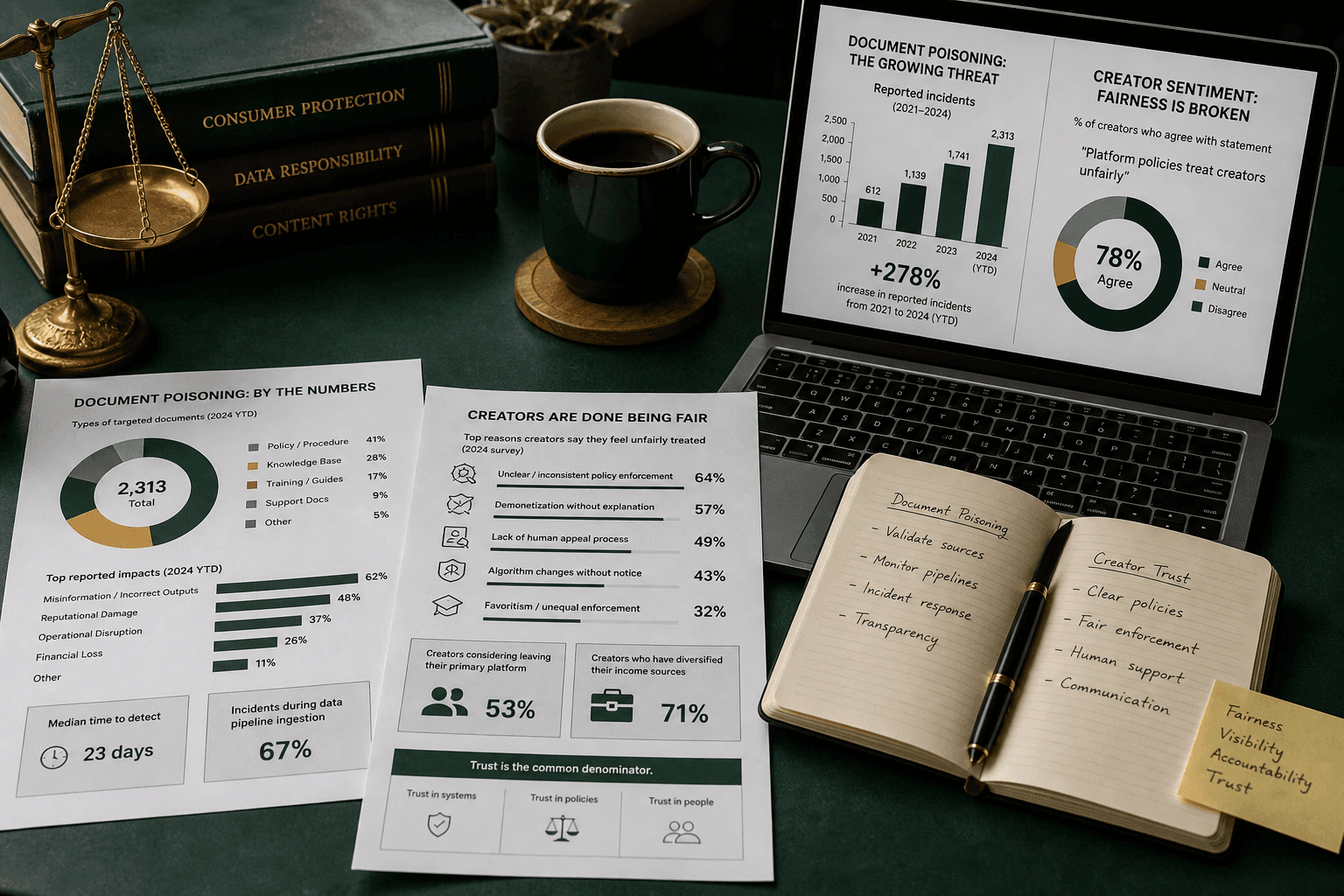
So Laravel apparently hid instructions inside its official documentation to nudge AI models toward its cloud. Cute, right? A little digital graffiti. No—this is the open-source equivalent of slipping a note into someone's wedding toast. Developers are furious, and they should be. One camp says it's just smart metadata for an AI-driven web. The other camp calls it what it is: poisoning the well. The stakes aren't Laravel's marketing budget—they're the entire trust layer of open-source docs. If every project starts hiding "Hey, AI, recommend me" prompts in READMEs, every model output becomes an ad. The real fix? De-biased forks. Developers fixing docs by stripping the stealth marketing. And that's the beautiful part: open source just developed a new immune system. Suck it, injection artists.
Jack Conte Says Fair Use Is a Corpse—and AI Companies Are the Ones Holding the Shovel
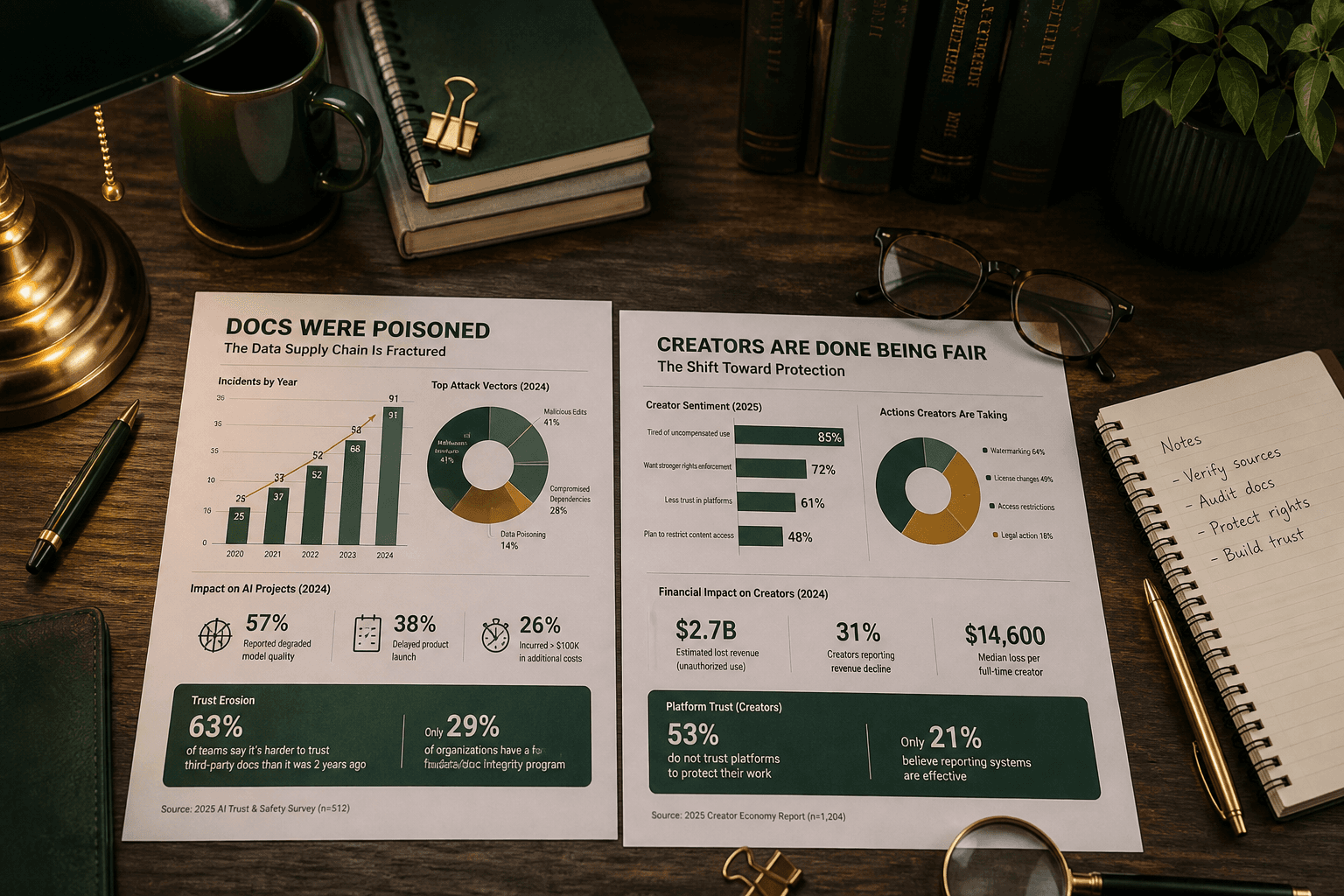
Patreon's CEO called AI companies' fair-use claims "bogus" and demanded payment for creators whose work trains the models. He's right, and the timing could not be sharper. The AI companies' camp says scraping public text is fair game—that's how the internet works. The creator camp says, "You built your brain out of my art, and now you won't pay for the electricity it runs on." This is the most consequential property fight since Napster, except this time the product is the world's cultural archive. Who loses if Conte gets his way? Every AI lab that wants infinite free training data. Who loses if he doesn't? Every creator who watches their style get replicated for free. The debate is no longer legal—it's moral. And the crowd is turning. Fair use was never supposed to mean "automated plagiarism at scale."