Google DeepMind SL2T: Sign Language to Text Model Released

Google DeepMind has officially released SL2T, a new AI model that translates sign language into text in real time. The model, detailed on DeepMind's blog, is designed to put sign language AI directly into users' hands, aiming to bridge communication gaps for deaf and hard-of-hearing communities. This is a production-ready release, not a research preview.
What does SL2T mean for accessibility?
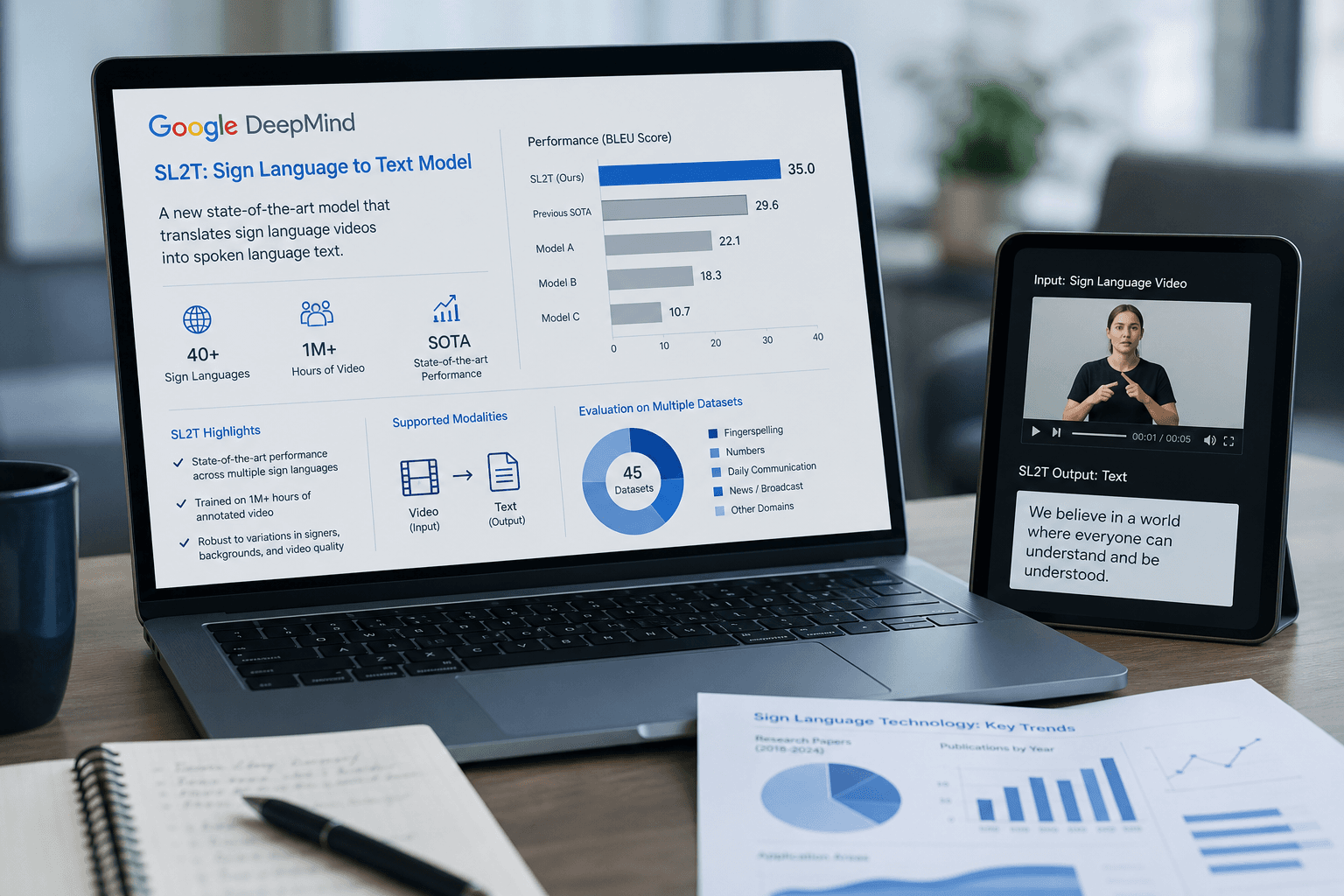
SL2T moves beyond experimental prototypes. DeepMind says the model is built for practical use, with a focus on low latency and accuracy across different sign languages. The release includes an open-source dataset and model weights, allowing developers to integrate sign language translation into apps, video calls, and assistive tools. This could dramatically reduce reliance on human interpreters for everyday interactions.
How does the model work?
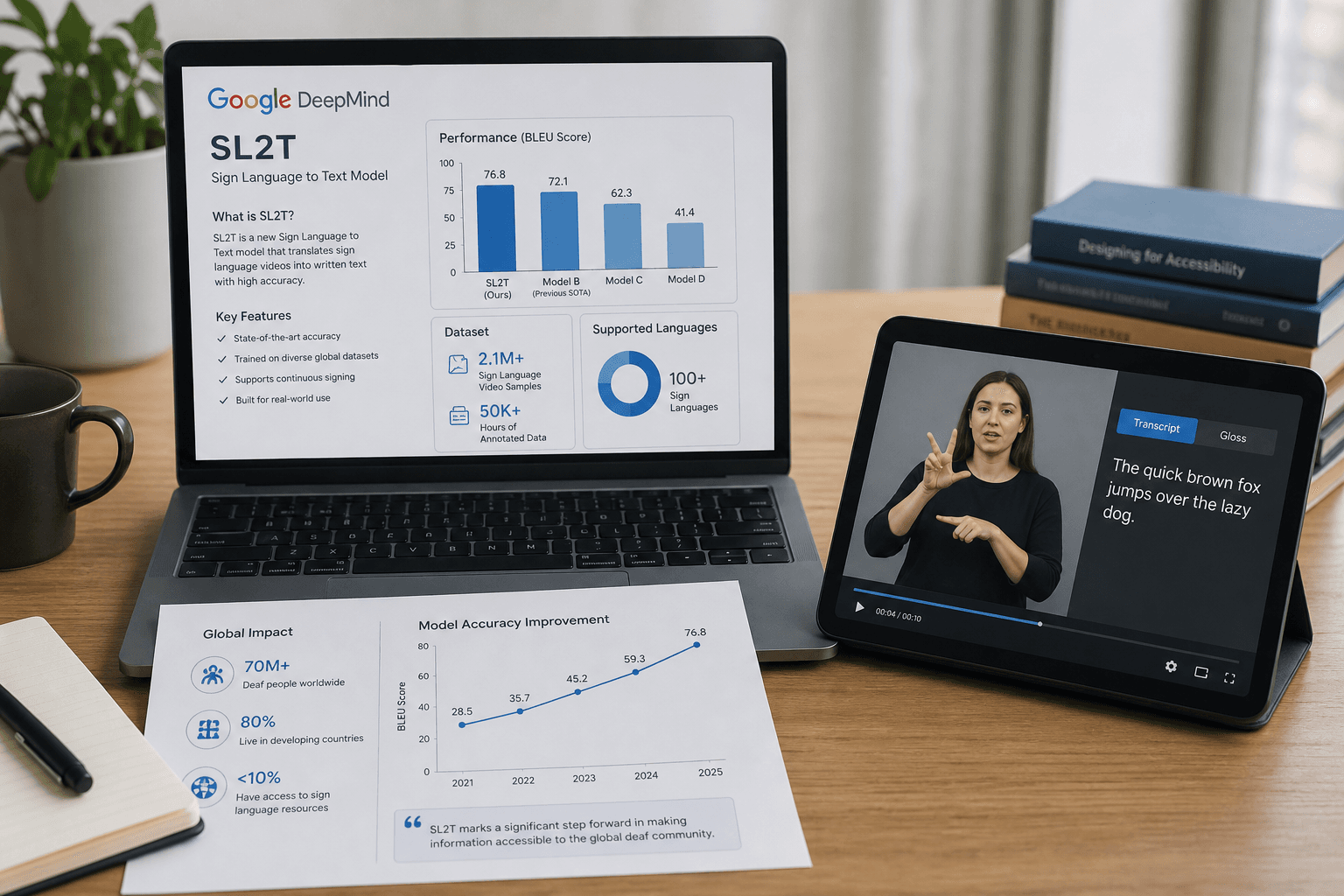
While DeepMind hasn't published full architecture details, SL2T uses a vision-transformer backbone trained on a new large-scale dataset of sign language videos paired with text transcriptions. The model processes continuous signing, not just isolated gestures, and outputs text in near real-time. The blog emphasizes that the system is designed to handle variations in signing speed, lighting, and camera angles.
What's the catch?
Early adopters should note that SL2T currently supports a limited set of sign languages, and accuracy varies by dialect. DeepMind frames this as a first step, inviting community contributions to expand coverage. The model is free to use, but commercial deployment may require additional fine-tuning for specific use cases.