GPT-5.6 Luna vs Mimo V2.5: Cheapest Models Slug It Out

If your org is bleeding tokens and the CFO is glaring at the bill, the fight you care about is at the very bottom of the price sheet. My verdict: GPT-5.6 Luna wins on raw capability and ecosystem polish, but Mimo V2.5 is the smarter pick for high-volume, low-stakes traffic where every cent counts. Neither will replace a frontier model, but one of them belongs in your pipeline today.
Price: The whole ballgame
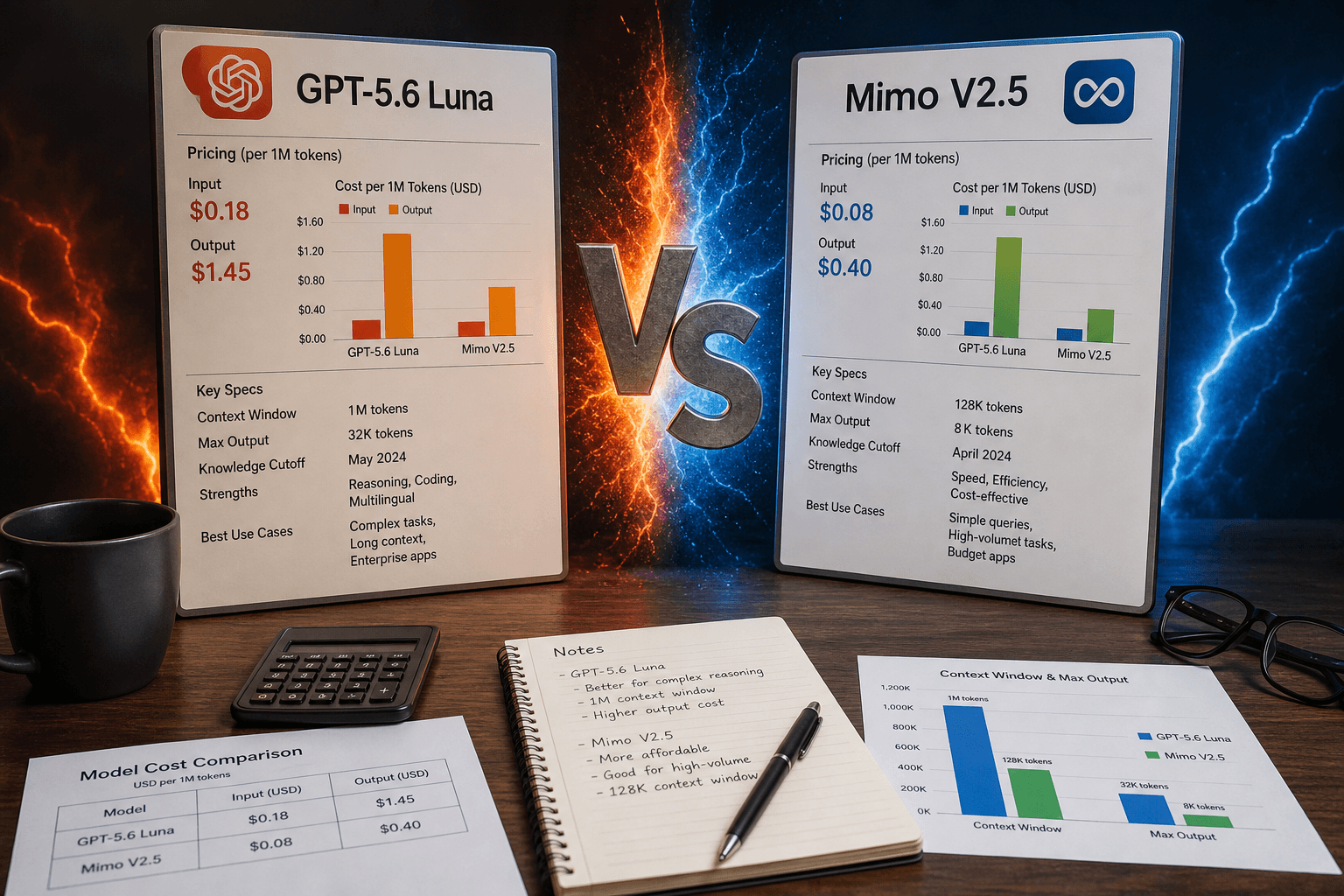
Luna runs $0.20 per 1M input tokens and $1.20 per 1M output. Mimo V2.5 undercuts that hard: $0.14 in and $0.28 out. On output-heavy workloads — think summarization, tagging, classification — Mimo is roughly four times cheaper on generation. That gap compounds fast when you're moving millions of tokens a day. Luna's output price is actually higher than Mimo's input and output combined.
Capability: Luna has the edge
You're paying more for a reason. Luna is OpenAI's budget tier, and it inherits solid instruction-following and JSON reliability that makes it drop into existing tooling with minimal prompt surgery. Mimo V2.5 is scrappier — fine for bulk extraction and simple rewrites, but it shows its limits on multi-step reasoning and longer structured outputs. If accuracy on complex tasks matters, the extra cents buy real headroom.
Latency and throughput
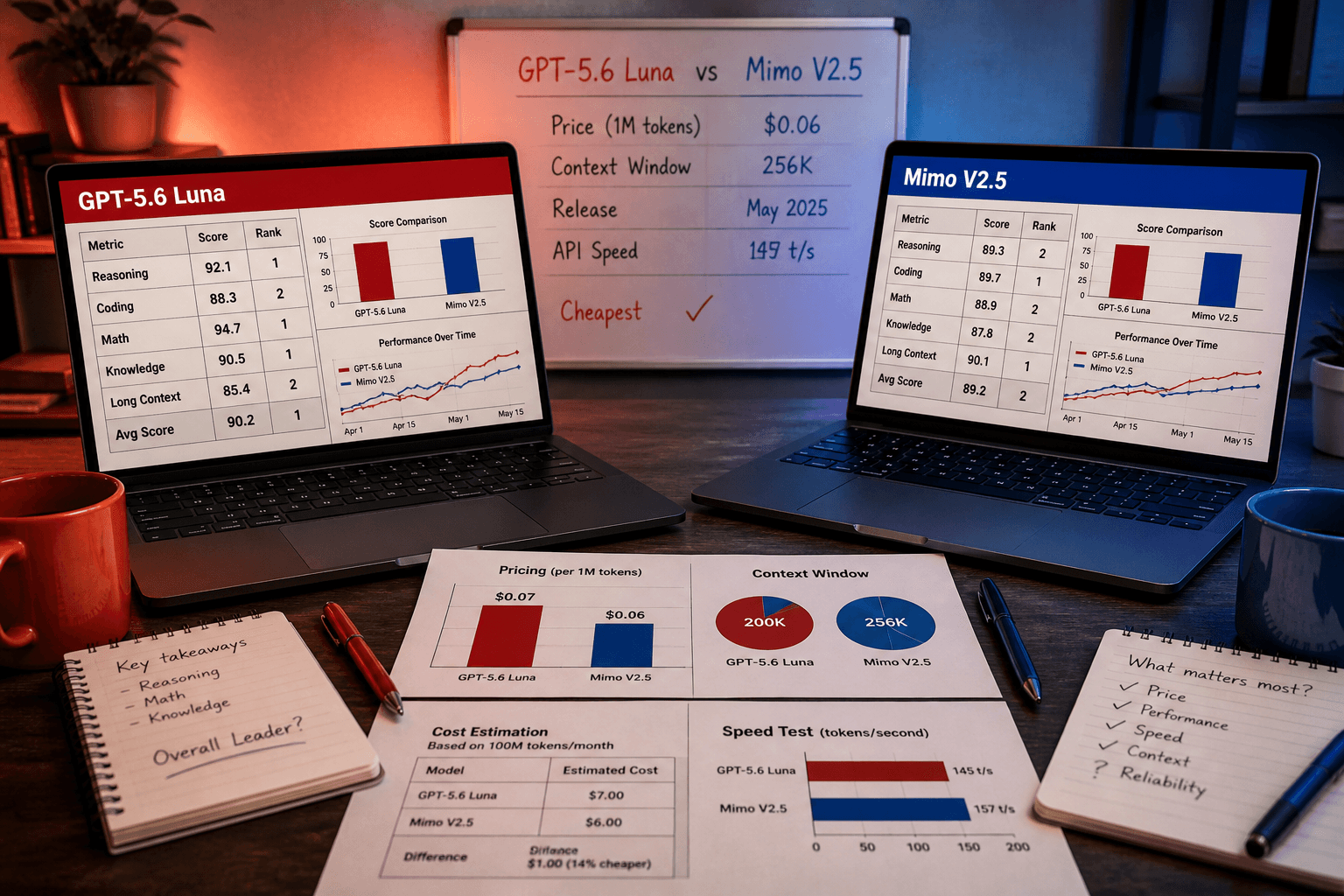
Neither model is a speed demon, but Mimo's leaner architecture generally returns faster on simple calls, making it competitive for real-time chat fallbacks and internal copilots. Luna's serving infrastructure is more consistent under load, so if you need predictable p95 latency during spikes, that reliability is part of what you're paying for.
Verdict: which one should you pick?
Pick GPT-5.6 Luna if you need dependable structured outputs, light reasoning, and easy integration with OpenAI tooling — the premium buys fewer headaches. Choose Mimo V2.5 for massive, repetitive token workloads where cost-per-task dominates and occasional hiccups are acceptable. Most teams will run both: Luna for the hard stuff, Mimo for the grunt work.