GPT-6 Astra vs Claude Fable 5.1: Same Price, Different Fight


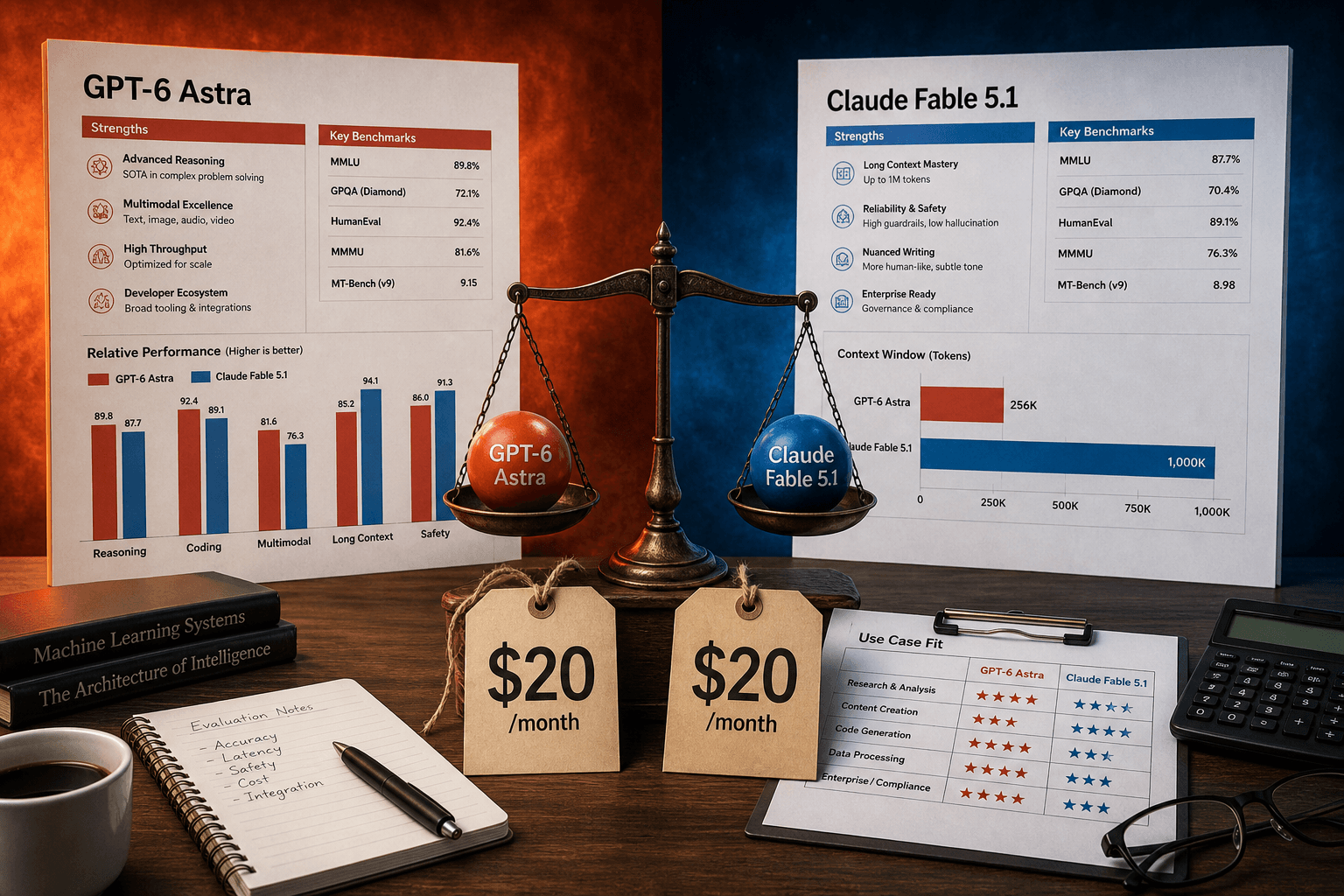
Both cost $10 per million input tokens and $50 per million output, so you're paying for a flagship tier. But GPT-6 Astra and Claude Fable 5.1 are not the same bet. Fable 5.1 feels like the sharper prose stylist and the safer pair of hands for long, nuanced documents, while Astra is the faster, more aggressive generalist that holds up better under messy, multi-step workloads. If your budget only stretches to one premium model, this one comes down to what you actually feed it.
Coding and Agentic Work
Astra wins on raw agentic stamina. It keeps its chain-of-thought together across long tool-calling loops and shrugs off mid-task context switches that make smaller models stumble. Fable 5.1 is no slouch — it writes clean, conventional code and explains it beautifully — but it's more deliberate. You feel it on a tight deployment deadline: Astra pushes through, Fable double-checks first.
Writing and Nuance
Flip it around for prose. Fable 5.1 produces copy that reads like a human editor touched it, with rhythm and restraint you rarely get from a frontier model. Astra gets the job done with more boilerplate and a tendency to over-explain. For contracts, policy briefs, or anything where tone matters, Fable 5.1 is the better buy at the same price.

Speed and Cost Per Use
No hard latency numbers are published for this generation, but Astra generally feels snappier in practice, which translates into lower real-world cost per completed task if you're paying per call. Fable 5.1's deliberation costs time, not tokens — but time is money when you're running batch workflows.
Verdict: which one should you pick?
Pick GPT-6 Astra if your work is heavy on coding, automation, and agentic pipelines. Pick Claude Fable 5.1 if you want a premium writing partner that turns out polished, human-sounding deliverables. At the same $10/$50 price, this is a role-based split, not a quality gap.