GPT-6 Sol vs Claude Opus 5.5: The $4 Budget Heavyweight Fight

This one's a genuine toss-up, and the $4/1M-in price tag for both makes it a true wallet-level decision. GPT-6 Sol wins on raw coding throughput and cheaper output, while Claude Opus 5.5 pulls ahead on nuanced reasoning and long-context consistency. If you ship code all day, GPT-6 Sol earns its keep. If you're doing complex analysis or agentic workflows, Claude Opus 5.5 is the safer bet. Neither is a bad call — this is about matching the model to the job.
Coding and speed
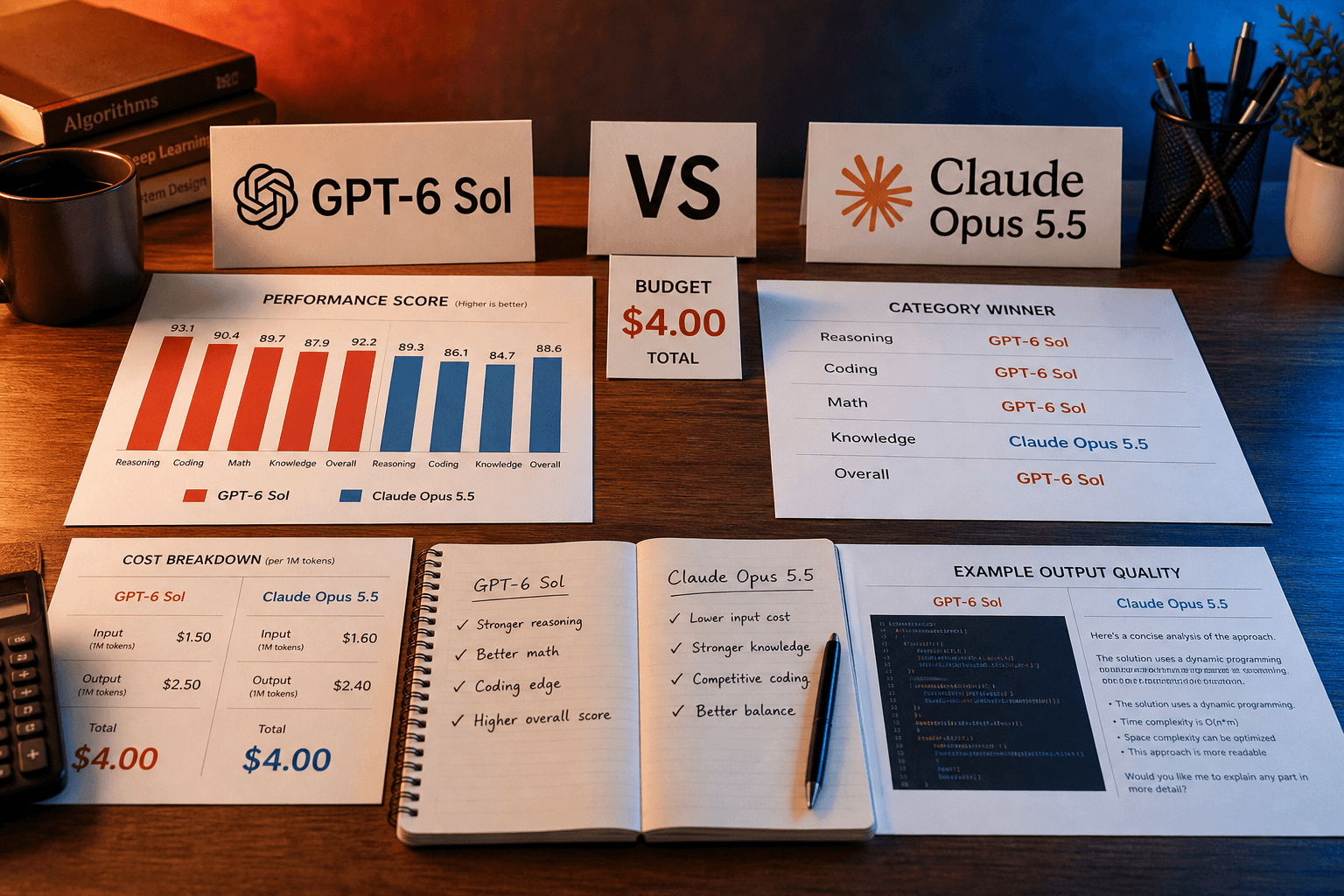
GPT-6 Sol is built for volume. At $10/1M output, it undercuts Claude Opus 5.5's $20/1M output by half, and the fast variant keeps the same price while delivering noticeably lower latency. Claude Opus 5.5 counters with its coding-arena strength — Anthropic's models have consistently dominated head-to-head code edits in recent benchmarks. For long-horizon software engineering, GPT-6 Sol's DeepSWE-style results are strong, but Opus 5.5 tends to handle gnarly refactors with fewer wasted attempts.
Reasoning and context
Claude Opus 5.5 has the edge when the task needs careful judgment. It holds up better on multi-step reasoning and ambiguous requirements. GPT-6 Sol is no slouch — it leads on GPQA-style science questions — but it can feel more eager than careful on tricky logic puzzles. For agentic use, Claude's steadier behavior and stronger instruction-following make it the pick for workflows where a mid-step mistake costs you.
Verdict: which one should you pick?
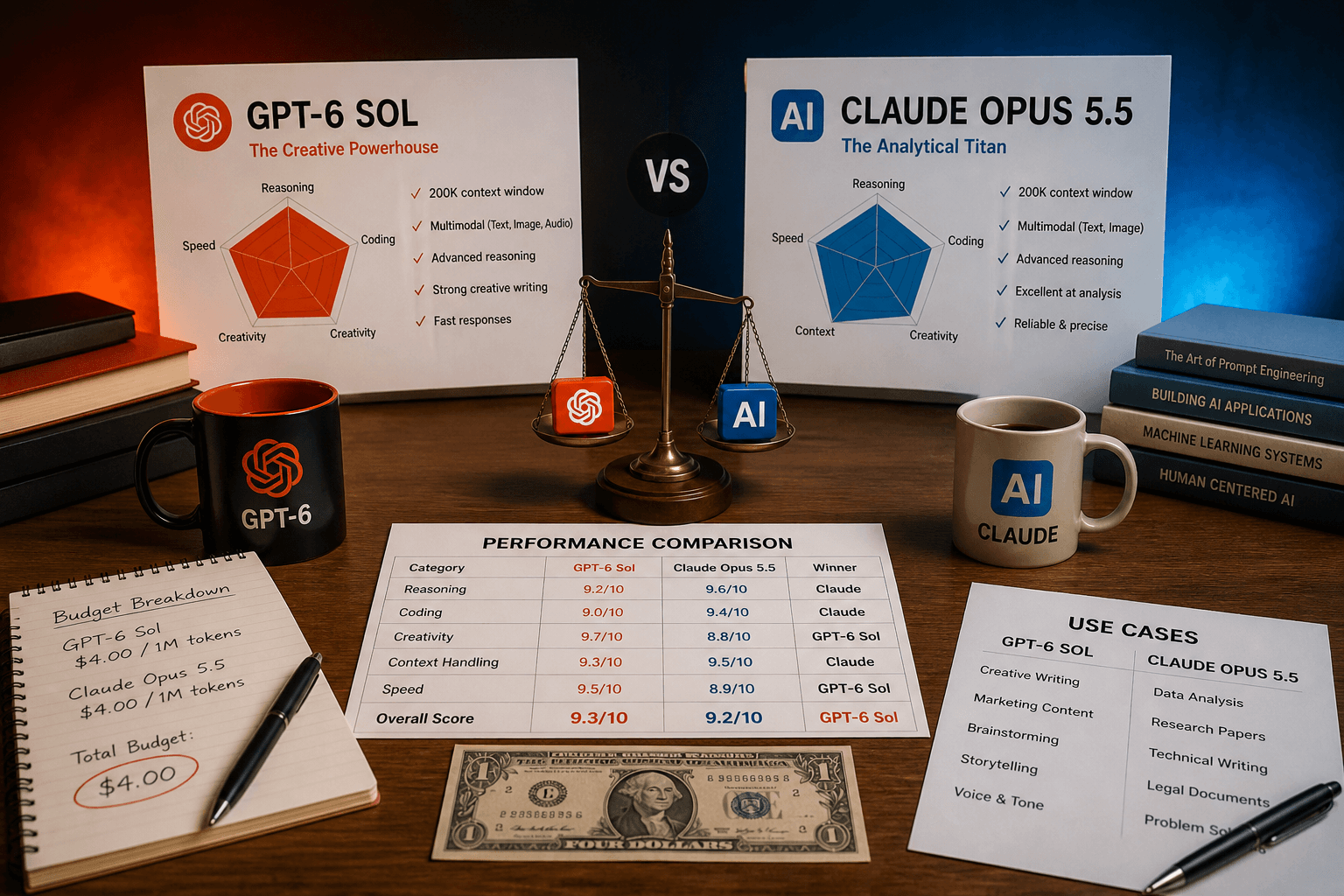
Pick GPT-6 Sol if you're grinding out code, API integrations, or high-volume generation where output cost and speed matter most. Pick Claude Opus 5.5 if you need sharper reasoning, careful long-context work, or a model that feels more deliberate. Both are excellent at $4 — you're really choosing between a sprinter and a marathoner.