GPT-6 Sol vs Claude Sonnet 5.5: The $2 Budget Twins

If you're shopping on a budget, this is the matchup that actually matters right now: GPT-6 Sol and Claude Sonnet 5.5 both cost $2.00 per million input tokens and $10.00 per million output. My verdict: for general coding and agentic workflows, GPT-6 Sol edges it on raw benchmark muscle, but Claude Sonnet 5.5 is the steadier pick if you want reliability without the hype. Neither will embarrass you, but they reward different habits.
The price-to-performance core
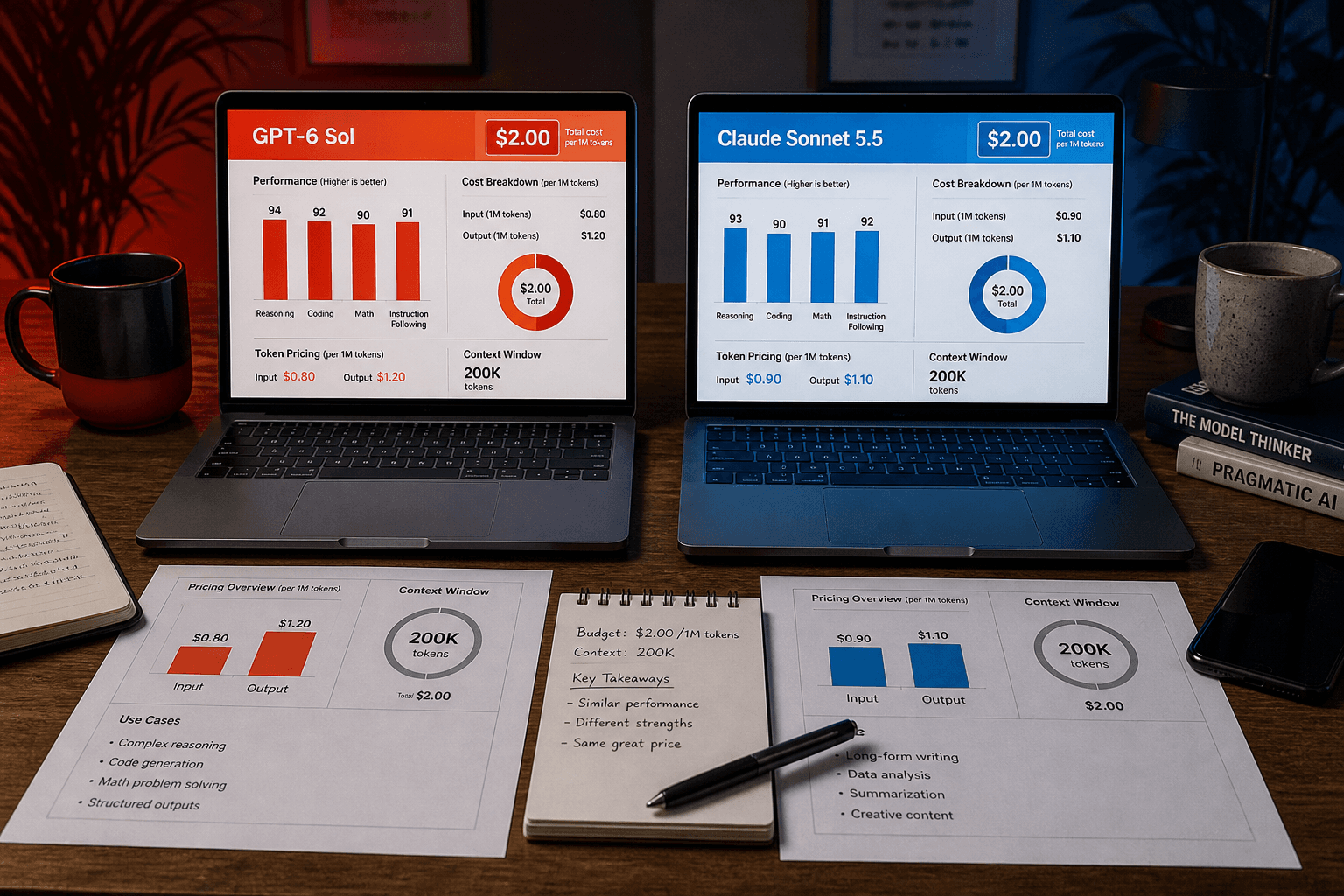
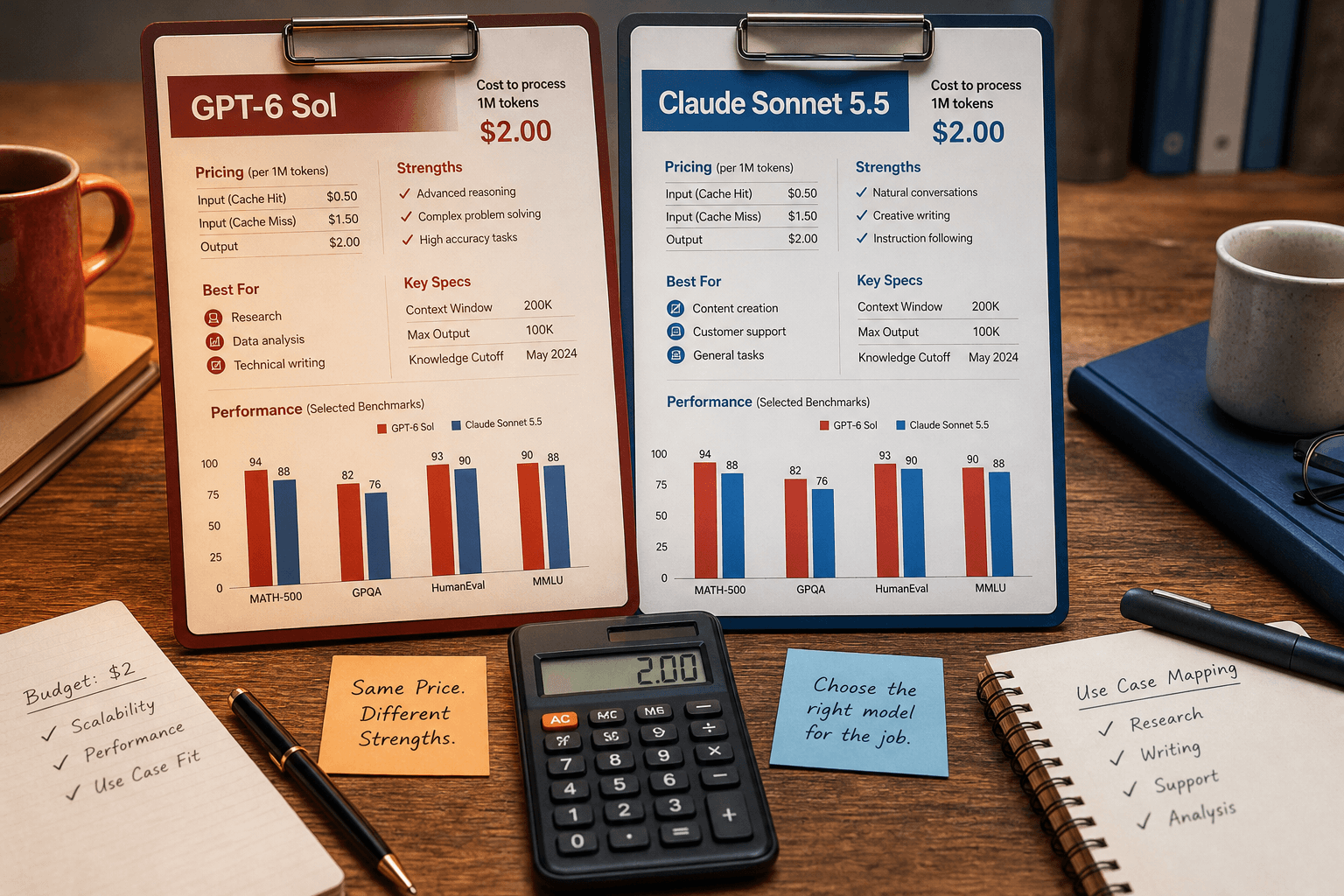
Both models sit at the exact same price point: $2.00/1M input and $10.00/1M output. That makes this a pure value fight. GPT-6 Sol is the budget tier of the GPT-6 family, while Claude Sonnet 5.5 is Anthropic's mid-range workhorse. Same dollar, different design philosophy. The benchmark snapshot shows no single model dominates every test, so you're really choosing which failure mode annoys you less.
Coding and long tasks
On SWE-Bench Verified, the reported leader is Claude Opus 5 at 97.00%, with seven models above 95% — which tells you the gap between top and mid is tiny. For long-horizon agent work, a February 2026 comparison has Gemini 3.1 Pro leading APEX-Agents at 33.5%, so neither of these two is the absolute champion. Where GPT-6 Sol tends to shine is faster iteration on multi-step coding tasks; Claude Sonnet 5.5 tends to stick the landing on tricky refactors with less hand-holding.
Which one should you pick?
Pick GPT-6 Sol if you want aggressive coding speed on a budget and you're comfortable debugging its occasional overreach. Pick Claude Sonnet 5.5 if you'd rather have a dependable, consistent tool for production code and everyday agent glue. At $2 per million input tokens, you can afford to test both — but if you only pick one, let your tolerance for surprises decide.