Kimi K3 vs GLM-5.3: Mid-Tier China Models Duel

Kimi K3 and GLM-5.3 are both stepping up as the value picks for teams that want solid performance without paying flagship prices. I'm giving this one to Kimi K3 on raw reasoning but GLM-5.3 wins the cost-per-token fight. Let's break down where each actually shines.
Speed and Reasoning
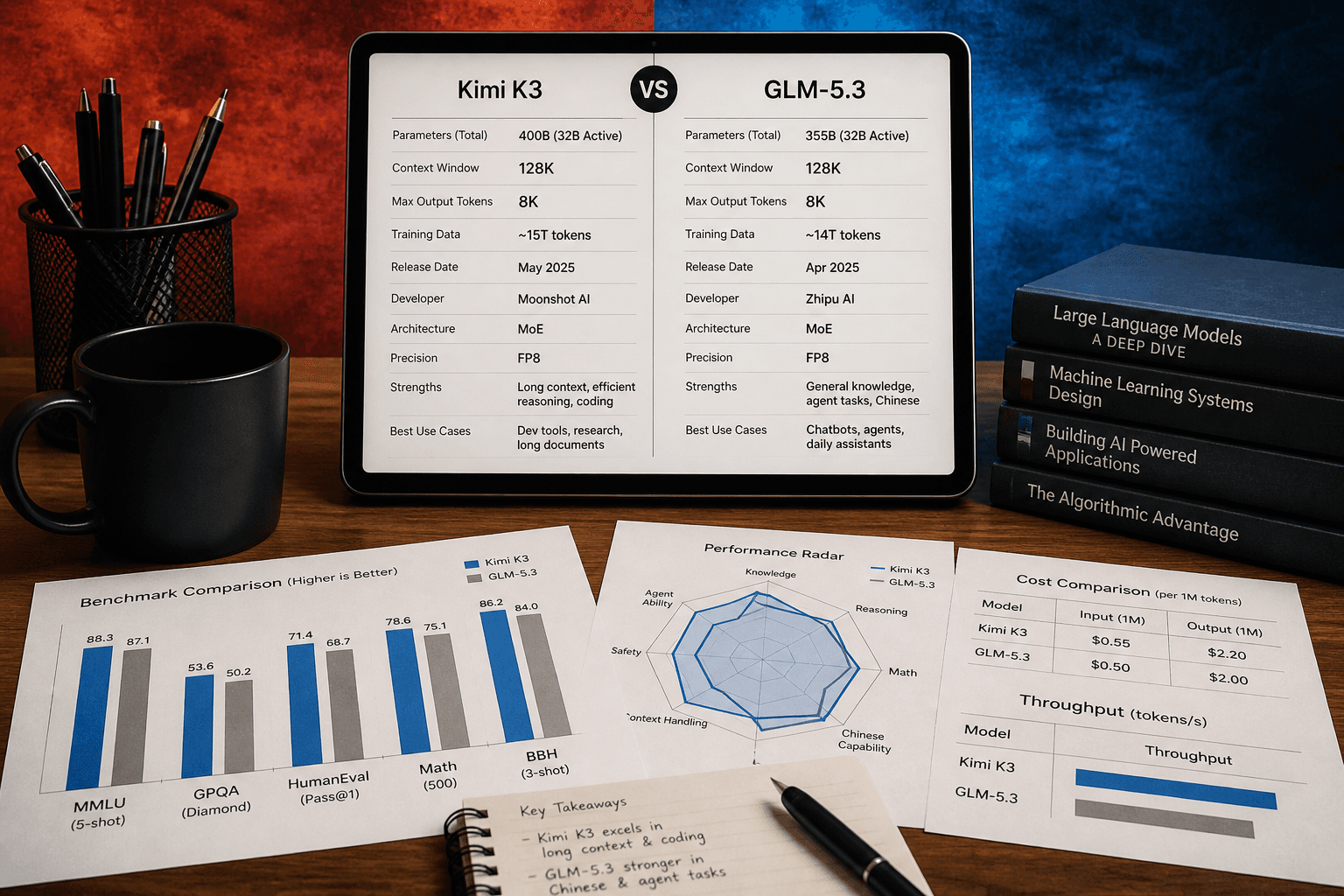
Kimi K3 hits a $3.00/1M input and $15.00/1M output price point, and it shows in complex tasks like multi-step math and code debugging. GLM-5.3, at $2.80/1M in and $8.80/1M out, feels snappier on routine Q&A but bottlenecks on long reasoning chains. Neither crushes the other on benchmark gaps—the top models are all within a few points—but Kimi K3's edge in logical consistency makes it the safer bet for agentic workflows.
Cost Efficiency
Here's where GLM-5.3 punches back. Output at $8.80 is nearly half of Kimi's $15. That adds up fast if you're feeding big prompts and long completions. For a team doing heavy generation—summaries, drafts, logs—GLM-5.3 stretches your budget roughly 40% further per dollar on output. Kimi's cheaper input doesn't offset that unless you're not generating much.
Real-World Fit
Both handle standard dev work fine. But if you're building a production app where token volume is the main cost driver, GLM-5.3 is the pragmatic choice. If you need deep reasoning for research or complex code refactors, Kimi K3 justifies the premium. There's no clear winner across the board—it's about where your bottleneck is.
Verdict: which one should you pick?
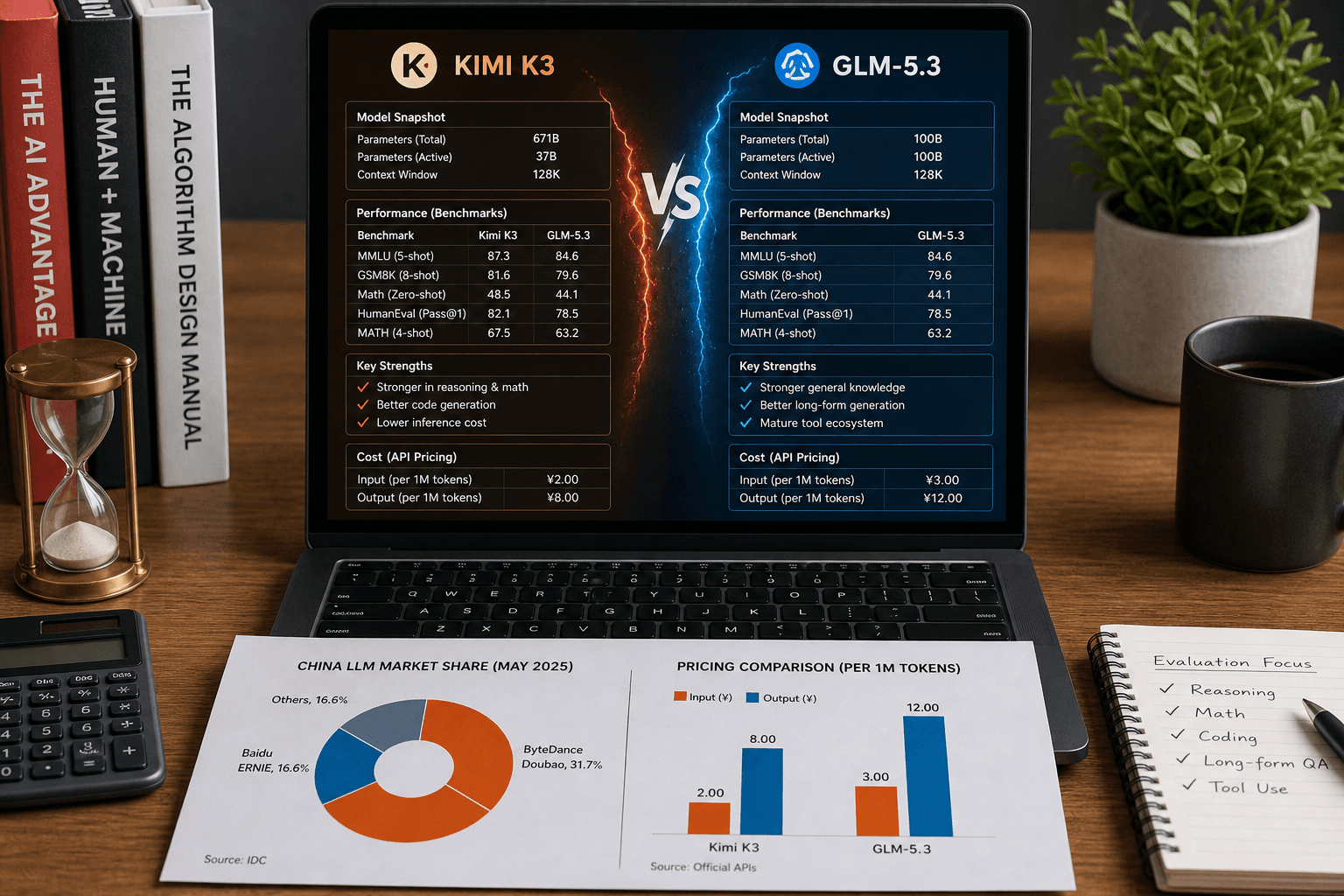
Choose Kimi K3 if you need stronger reasoning and can absorb higher output costs. Choose GLM-5.3 if you're cost-sensitive and mostly doing high-volume, lower-complexity tasks. Most small teams will do fine with either, but GLM-5.3 stretches a tight budget further.