Kimi K3 vs GPT-5.6 Sol: The $1 Premium Question

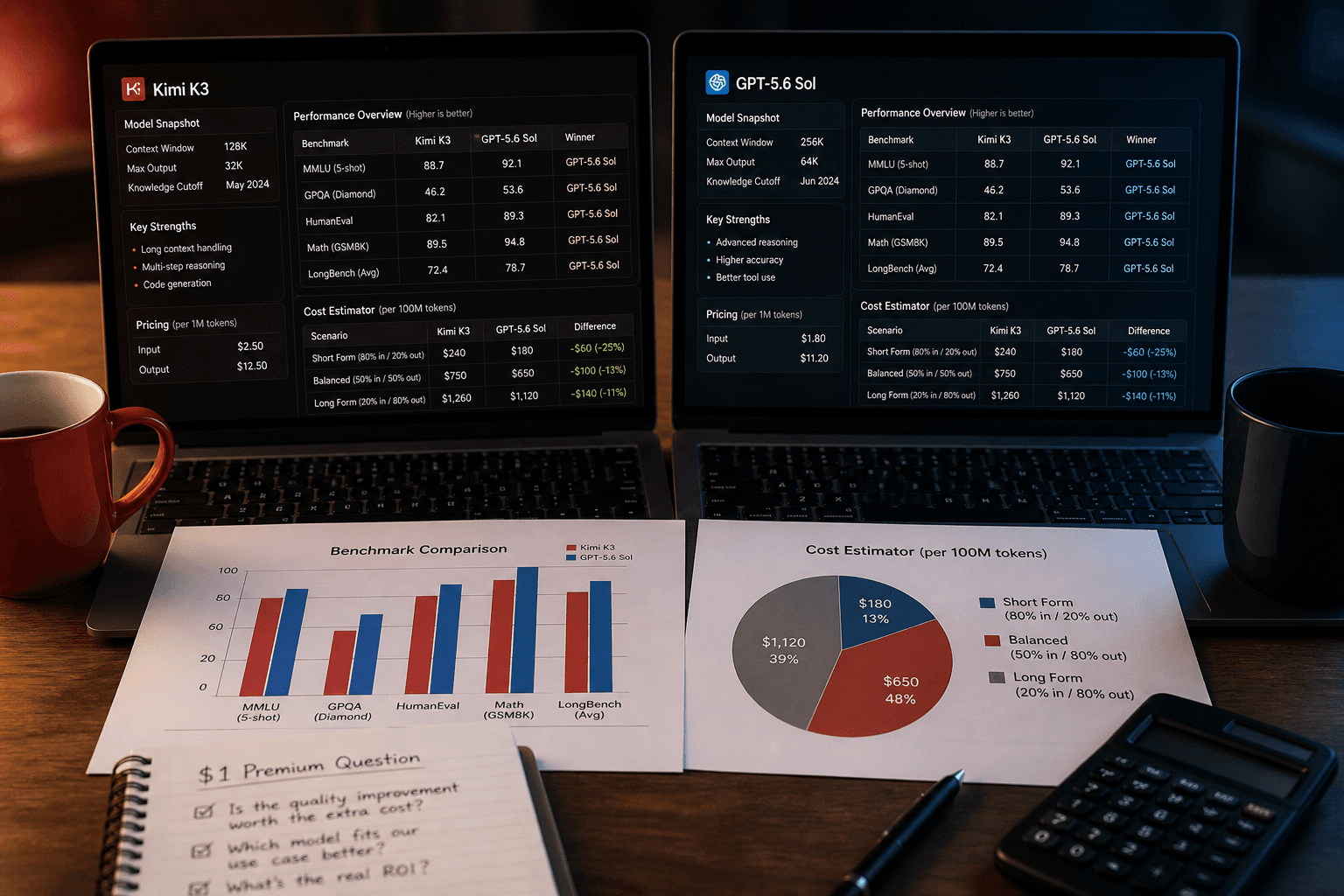
Kimi K3 and GPT-5.6 Sol are both mid-tier reasoning models, and the $1 input gap is the whole game. At $3/$15 vs $4/$20 per million tokens, GPT-5.6 Sol asks for a 33% premium on input and 33% on output. The real question is whether that extra dollar buys noticeably better output.
The price split
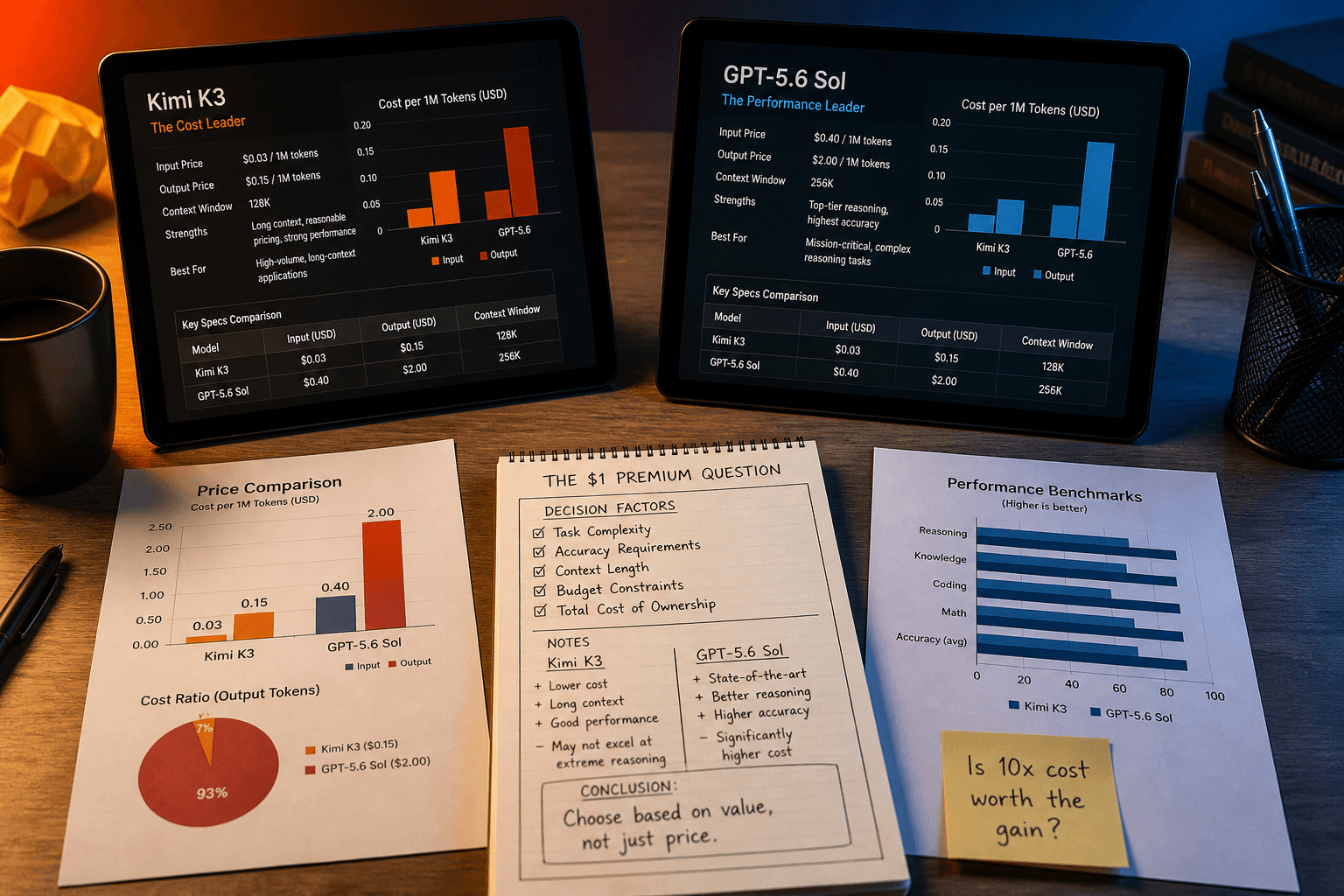
Kimi K3 comes in at $3.00/1M in, $15.00/1M out. GPT-5.6 Sol sits one notch higher: $4.00/1M in, $20.00/1M out. For a long-form agentic workflow with 5M tokens in and 1M out, that's a $5 difference — $35 total for Kimi vs $40 for Sol. Not nothing, but also not a budget breaker.
Reasoning and coding context
Benchmark scores for this exact pair aren't public, but the broader July 2026 landscape shows GPT-5 family models hovering near the frontier while capable open and mid-tier models close the gap. GPT-5.4 Pro leads reasoning at 9.5/10 in recent reports, which suggests the GPT-5 lineage has polish. Kimi K3's edge is typically efficiency — similar thread quality at lower cost, per the usual pattern of cheaper Chinese labs.
Verdict: which one should you pick?
If you're cost-sensitive and doing high-volume classification or extraction, Kimi K3 wins outright — the numbers are close enough that the $1 delta does the talking. If you're building a customer-facing reasoning product where a 9% quality miss makes you look bad, GPT-5.6 Sol is the safer premium. Most teams testing both will land on Kimi K3 for internal tools and GPT-5.6 Sol for the stuff clients actually see.