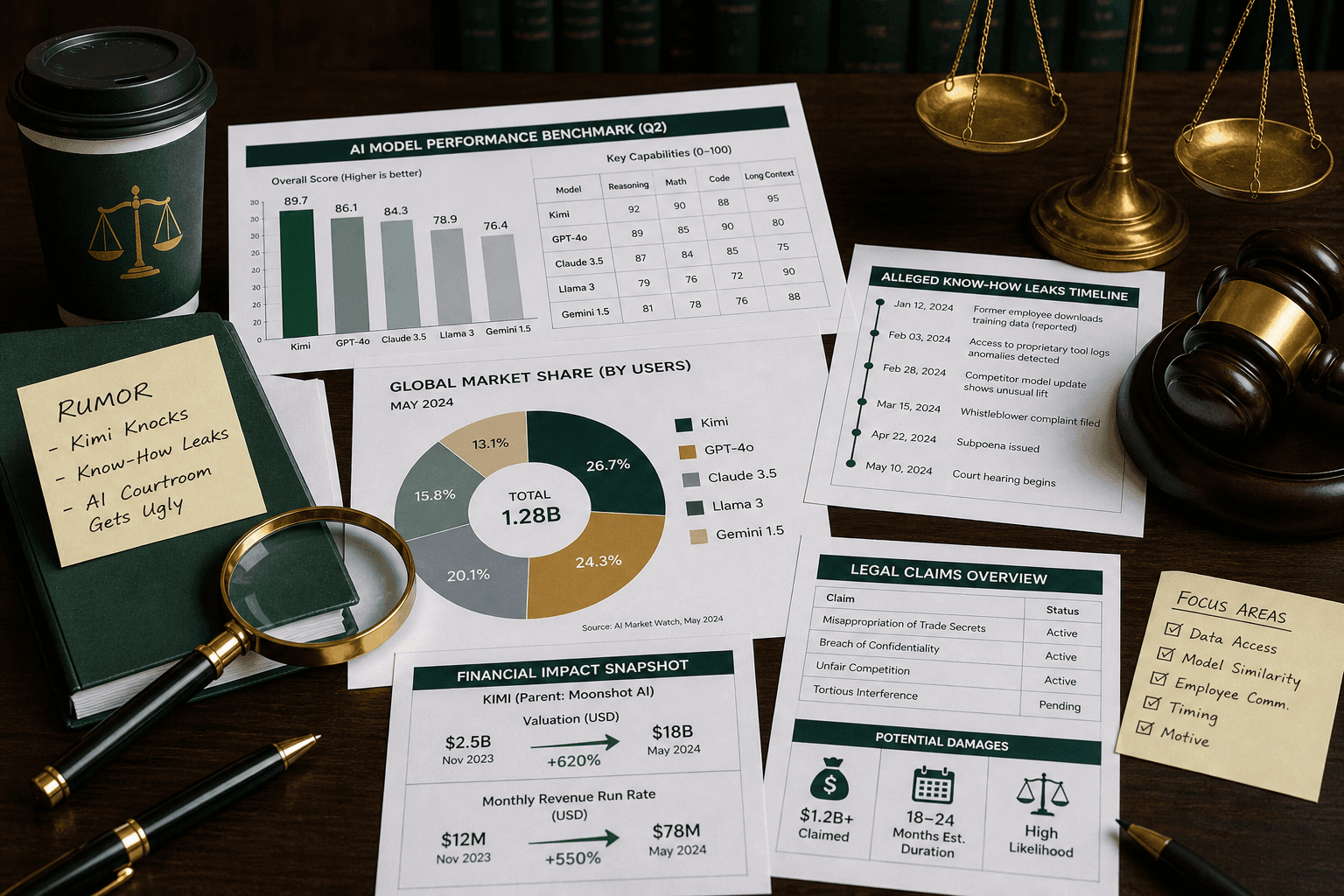
[Rumor] Kimi Knocks, Know-How Leaks, and the AI Courtroom Gets Ugly

Unconfirmed report — treat as rumor.
Kimi K3 Just Turned the Frontier Race Into a Geopolitical Food Fight
Here comes Moonshot, kicking the door open with Kimi K3, a Chinese model it claims can rival U.S. frontier AI models. That word — claims — is doing heavy lifting, but don’t pretend the room didn’t get quieter.
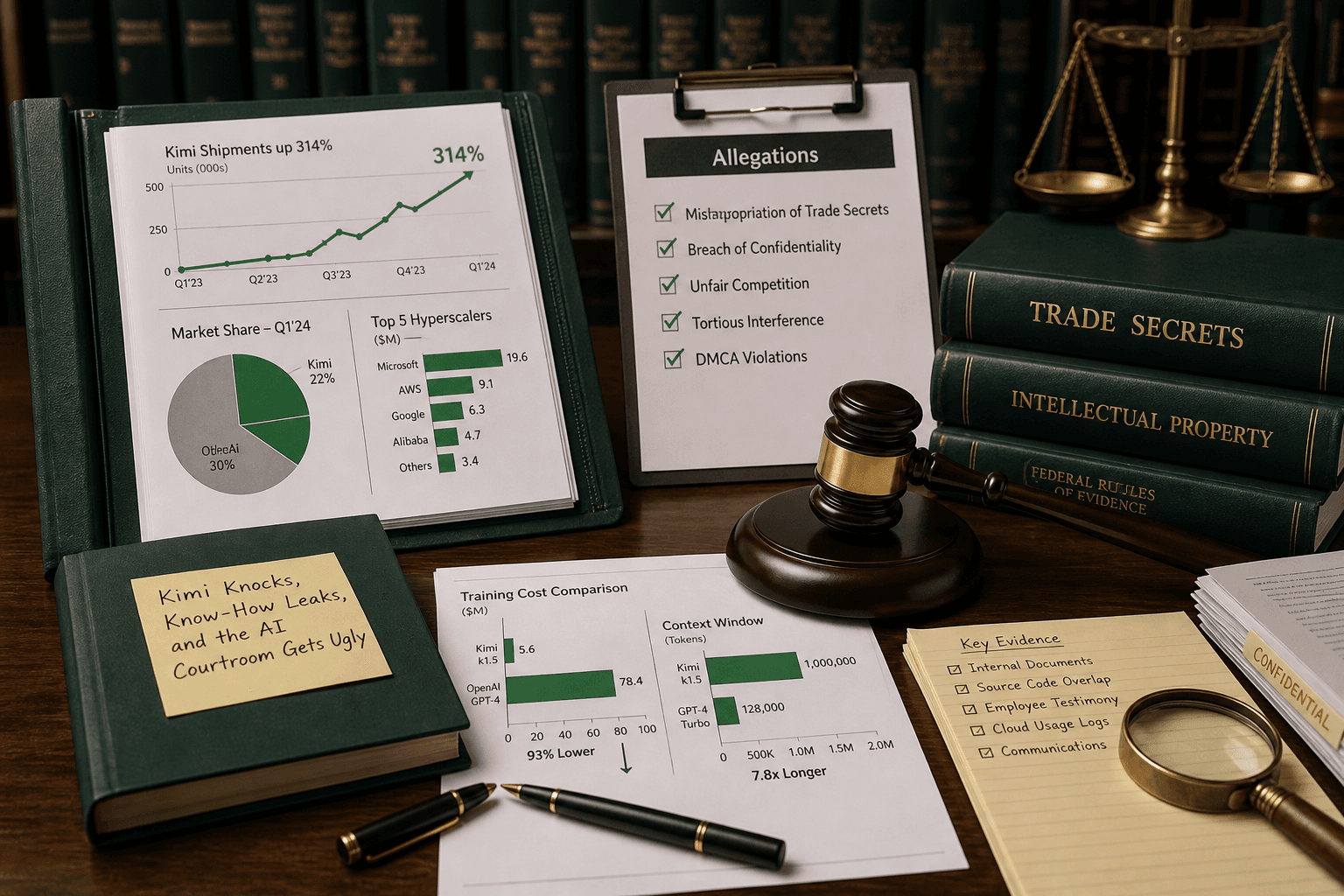
The argument now isn’t just model-vs-model. It’s national strategy dressed up as benchmark theater. One camp sees this as proof that U.S. dominance is shakier than advertised. The other says: cool demo, show the receipts. And hovering over the whole thing is Chinese President Xi Jinping’s call for global AI governance, which lands like a velvet glove over a steel cage match.
Who wins if Kimi K3 is the real deal? Chinese AI firms get swagger. Global regulators get a louder reason to demand rules. U.S. labs get another reason to talk about safety, speed, and export controls before breakfast. Who loses? Anyone still pretending this is just a product race.
Enterprises May Be Donating Their Brains to AI Labs
Big Tech executives are now warning enterprises that they’re giving away too much to AI labs. Microsoft CEO Satya Nadella, according to Fortune’s headline, is among those warning that AI labs are “stealing their know-how.” Spicy? Absolutely. Also awkward, because the people sounding the alarm are standing inside the same ecosystem that made AI adoption feel mandatory.