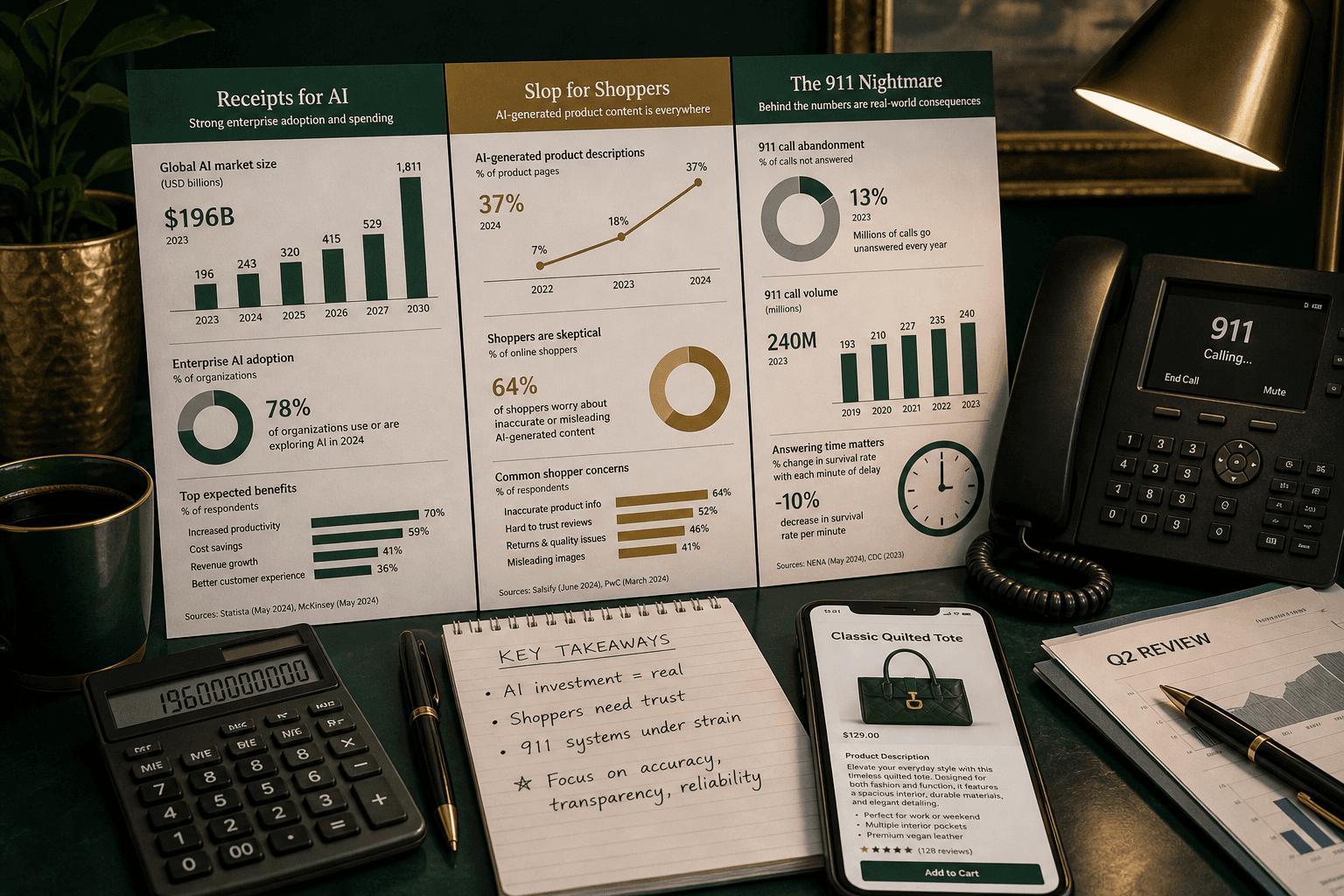
Receipts for AI, Slop for Shoppers, and the 911 Nightmare

California Just Made AI Content Carry a Receipt
California SB 942 is operative today, and there’s the opening bell: generative-AI providers with more than 1 million California monthly users must embed C2PA-compatible provenance in AI-generated content.
Cue the shouting match. One camp sees this as basic hygiene: if machines are flooding the feed, the least they can do is leave fingerprints. The other camp is already rolling its eyes, because provenance only works if the platforms, tools, and users don’t treat it like the tag on a mattress: technically important, spiritually ignored.
The stakes are simple and ugly. If this works, California nudges the industry toward traceability without waiting for everyone else to stop arguing in conference rooms. If it doesn’t, we get compliance theater with better acronyms. Either way, the “just trust us” era is getting a legal side-eye, and honestly? About time.
TikTok Shop Slop Meets Recalled Supplements
404 Media’s headline is a full-body cringe: an AI TikTok Shop slop factory shilling supplements the FDA recalled. That sentence alone should make every “AI will optimize commerce” guru stare quietly into a wall.
Here’s the debate in its purest form. The booster camp wants to talk scale, automation, frictionless selling — all the shiny words that sound great until the product being pushed is tied to an FDA recall. The other camp is yelling, correctly, that “AI-generated shopping content” isn’t cute when it’s wrapped around health products. This isn’t a weird meme account selling novelty socks. This is the trust gap with a checkout button.